
Conscious is the sixth pillar in the 7 Cs of Retail Consumables because sustainability is not a standalone initiative. It is the outcome of better management, where retailers take a more conscious approach to consumables by reducing waste, avoiding unnecessary purchasing and using data to support more responsible decision-making.
Retailers face growing pressure to operate more sustainably. Customers expect it, regulators demand it and internal teams increasingly recognise it as a business imperative rather than a “nice to have.”
Yet when it comes to operational consumables and GNFR, sustainability often fails to translate into day-to-day decisions. It remains a strategic ambition rather than something embedded into daily operations.
Consumables are purchased frequently, used quickly and often managed locally. Decisions are made under time pressure with limited visibility of usage, waste or environmental impact. As a result, even well-intentioned sustainability strategies can struggle to gain traction at an operational level.
Operational consumables may not attract the same attention as packaging or products for resale, but their cumulative impact is significant. From cleaning materials and carrier bags to till rolls and back-of-house essentials, inefficiencies and missed opportunities are repeated across hundreds of stores.
At scale, even small inefficiencies translate into significant environmental and financial impact.
Common sustainability challenges include:
The UK Government’s Resources and Waste Strategy for England highlights the importance of reducing waste through better resource efficiency and improved purchasing practices. Without visibility and control, it becomes difficult for retailers to turn policy intent into practical action.
Being conscious is not about intention — it is about control, visibility and consistency in how consumables are purchased and used.
In a retail consumables context, conscious management means:
What conscious management is not:
In this context, sustainability is not only about reducing waste, but about using time, materials and operational resources more efficiently across the retail estate.
Waste in retail consumables is rarely intentional. More often, it is the by-product of uncertainty.
When teams lack clarity over what has been ordered, what is in stock or what is being used, they tend to order defensively. This leads to excess inventory, duplication and products expiring before they are used.
In practice, waste is not only an environmental issue, but a direct cost to the business. Organisations such as WRAP consistently highlight that over-ordering and poor visibility are key contributors to waste across retail and supply chains, reinforcing the need for better data and more structured purchasing practices.
A conscious approach requires systems that support better decisions at scale. Procurement platforms such as MyAcopia enable this by embedding visibility, control and consistency into everyday purchasing.
This includes not only reducing physical waste, but also minimising the time and effort spent managing inefficient processes which are often overlooked contributors to overall resource use.
By improving visibility of ordering history and usage, retailers can move away from defensive purchasing. Teams can clearly see what is being ordered and used, reducing the tendency to overstock “just in case.”
This helps to:
This is where sustainability and cost intersect most clearly.
Systems such as MyAcopia provide the data needed to:
Industry analysts consistently highlight that organisations using data to inform operational decisions are better positioned to achieve sustainable outcomes.

A conscious approach delivers value across the business:
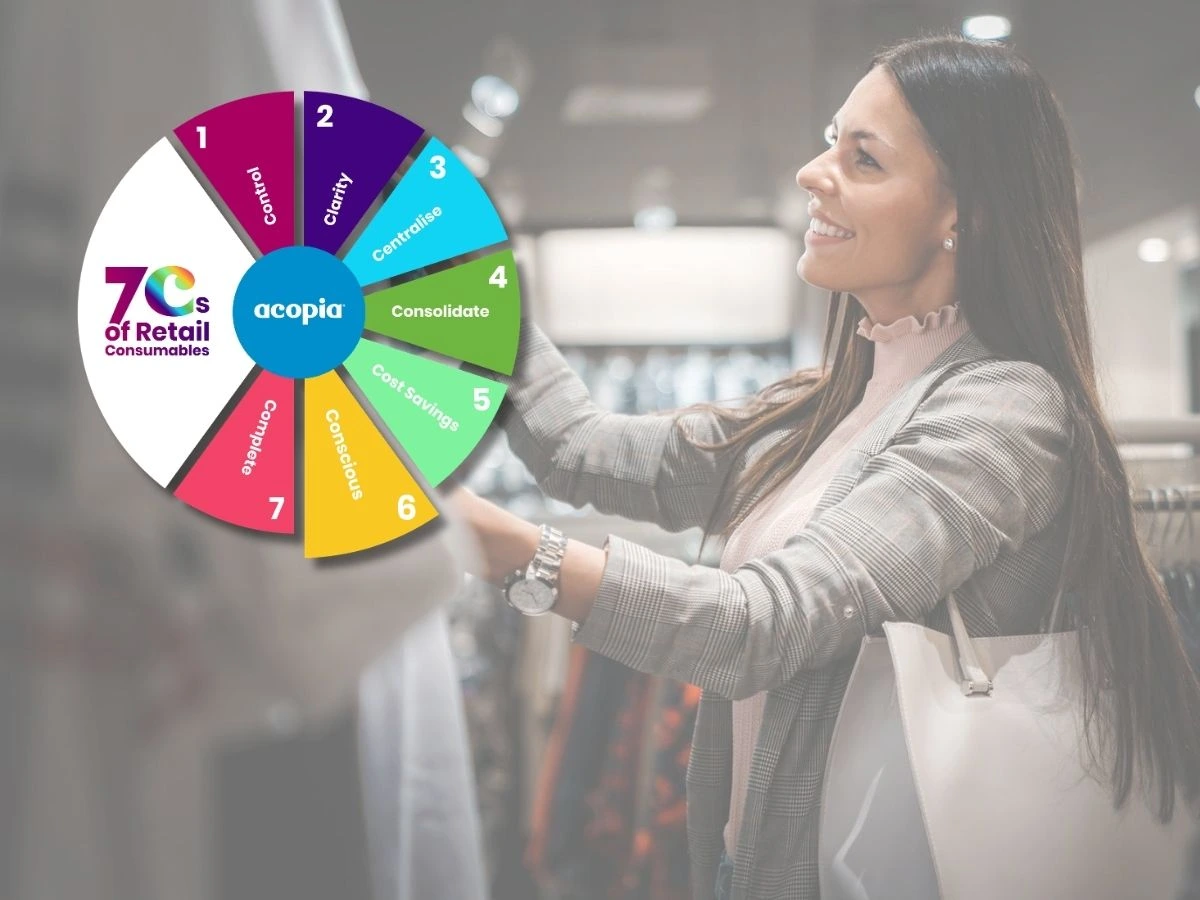
Conscious builds on Control, Clarity, Centralisation, Consolidation and Cost Savings.
A conscious approach enables retailers to:
Without these foundations, sustainability efforts remain fragmented and difficult to sustain, which is why they often fail when attempted in isolation.
Sustainability in retail consumables is not achieved through isolated initiatives. It is the result of better systems, clearer insight and more consistent behaviours embedded into everyday operations.
In this context, sustainability is not a separate initiative — it is a reflection of how well consumables are managed.
By taking a conscious approach, retailers can reduce waste, improve efficiency and support wider sustainability goals, all while maintaining operational effectiveness.
A conscious approach to consumables management does not add complexity, it removes it. When visibility improves and behaviours become consistent, sustainability stops being an aspiration and becomes part of how retail operations function every day.