
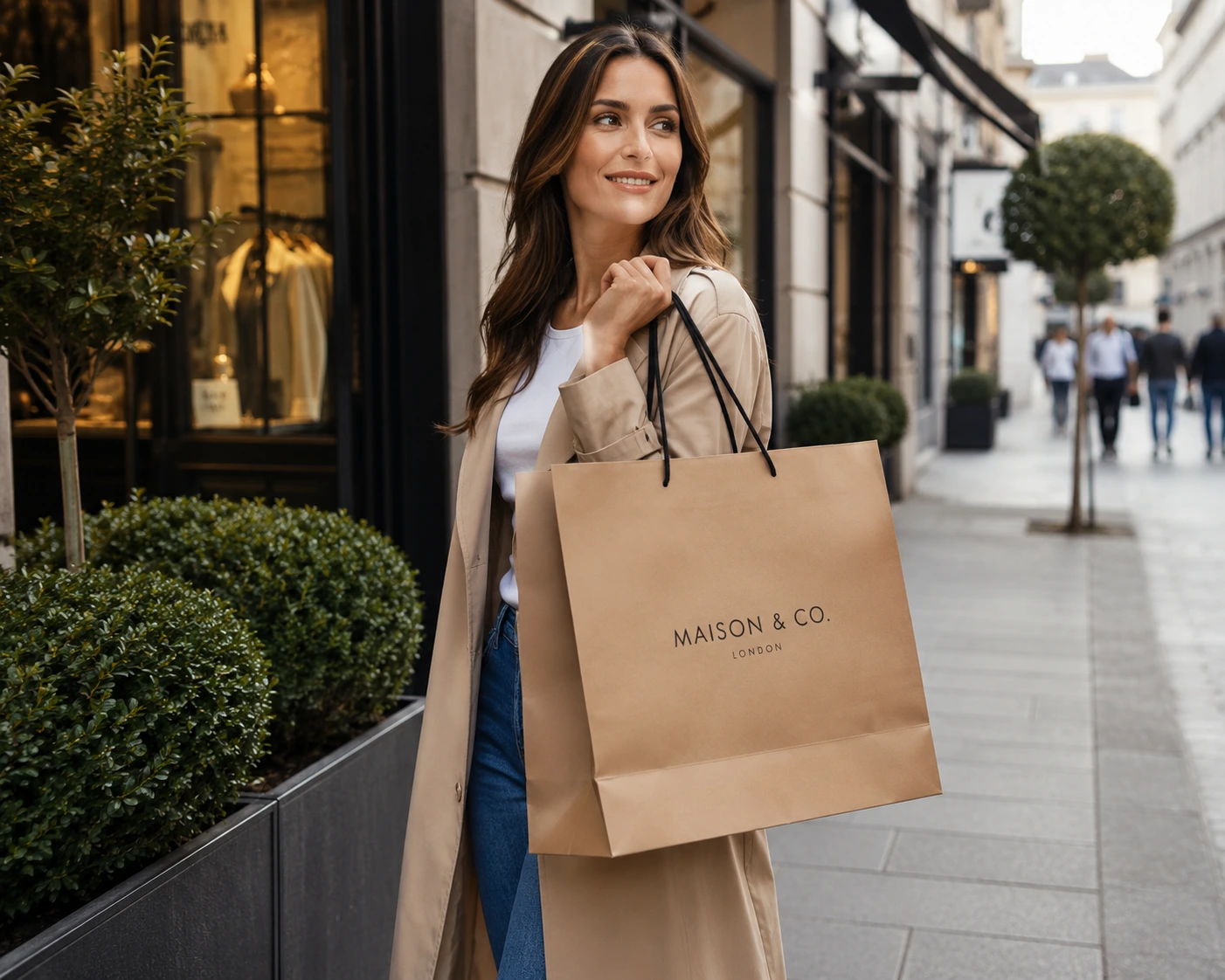
When customers leave your store, the shopping bag they carry becomes an extension of your brand. But choosing the most sustainable retail bag isn't as simple as picking paper over plastic or defaulting to a bag for life.
Retailers today face pressure to reduce environmental impact, comply with evolving legislation, manage costs and meet customer expectations, all while maintaining a good shopping experience.
So what is actually the most sustainable retail bag?
The honest answer?
It depends!
It depends on how the bag is made, how far it travels, what it's made from, how often it's reused, and what happens to it at the end of its life.
This guide answers the questions retail decision-makers ask most often.
The quick answer
There is no single "most sustainable" retail bag. The best option depends on the bag's material, weight, recycled content, transport emissions, expected reuse and end-of-life recyclability. For many retailers, lightweight bags made with high levels of recycled plastic offer one of the best balances between environmental impact, durability and cost.
If you're looking for the most sustainable option overall:
There is no universal "best" bag. As the UK Environment Agency's own lifecycle research states, the most sustainable option isn't necessarily the one made from the "greenest" material, it's the one that delivers the lowest environmental impact across its entire lifecycle1
Many people assume this question is really about plastic versus paper. In reality, sustainability should be measured across the entire product lifecycle, including:
This process is known as a Life Cycle Assessment (LCA). Looking at just one factor, such as whether a bag contains plastic, it doesn't give the full picture.
This is probably the most common question retailers ask. The answer: not always.
Advantages of paper
Disadvantages of paper
Because paper is significantly heavier than lightweight plastic, transporting paper bags generally creates higher transport emissions. For a retailer importing millions of bags a year, that extra weight can meaningfully affect freight emissions and of course, their Scope 3 numbers.
This is where the debate gets interesting. Many retailers assume a bag for life is automatically the sustainable choice. It isn't that straightforward.
Bags for life use much more material than lightweight carrier bags, which means more raw material, more manufacturing energy, more emissions, and more transport and storage capacity. To offset that higher upfront impact, they need to be reused many times.
If customers genuinely reuse them over months or years, bags for life deliver real environmental benefits. But if customers forget them and keep buying new ones each visit, those benefits decline fast which is why some environmental studies have questioned whether bags for life always live up to the assumption.
The key issue isn't what the bag is made from, it's how people actually use it. According to the UK Environment Agency, the single biggest factor affecting a carrier bag's environmental impact isn't its material; it's how many times it's actually reused.1
In many retail environments, yes. Some retailers are moving toward downgauged reusable bags, thinner recycled-content carriers, and other lightweight reusable options. These use considerably less material while remaining durable enough for multiple trips, which typically means less energy, lower transport emissions, and lower embodied carbon (the total greenhouse gas emissions generated across a product's entire lifecycle).
If customers reuse these bags several times before recycling them, they can offer a lower overall footprint than a heavier bag for life that only gets used once or twice. This points to a broader principle: using less material in the first place is often one of the biggest sustainability wins available.
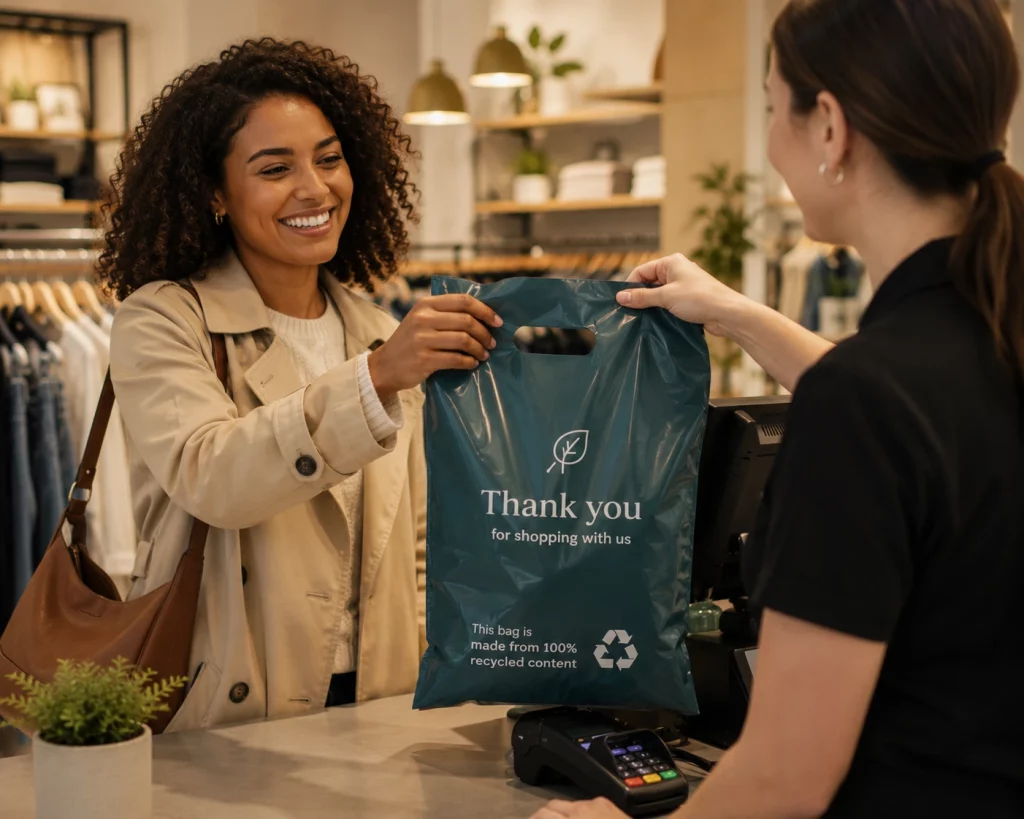
Recycled content can significantly cut demand for virgin plastic. Modern recycled-content carrier bags typically offer lower embodied carbon, reduced use of virgin fossil resources, strong durability, and full recyclability through the right collection systems.
Many retailers now specify high percentages of post-consumer recycled material while keeping bag weight as low as practical. The trade-off: collecting post-consumer waste can be challenging, and cleaning and reprocessing it into new bags often requires more energy. Even so, this approach tends to offer a strong balance of environmental performance, usability and cost.
Many can. But only if consumers know how.
Paper bags are widely accepted in household recycling collections. Plastic carrier bags are often recyclable through supermarket soft-plastic collection points, though local availability varies.
The biggest challenge for retailers usually isn't whether bags are technically recyclable, its making sure customers know where and how to recycle them. Clear on-pack messaging can meaningfully improve recycling rates.
No. Carbon matters, but it isn't the whole picture. Retailers should also weigh resource consumption, recycled content, waste reduction, circular economy principles, transport efficiency, consumer behaviour, recyclability and responsible sourcing.
A bag with slightly higher carbon emissions may generate significantly less waste. Conversely, a very low-carbon bag that ends up in landfill after one use may not be the most sustainable choice overall.
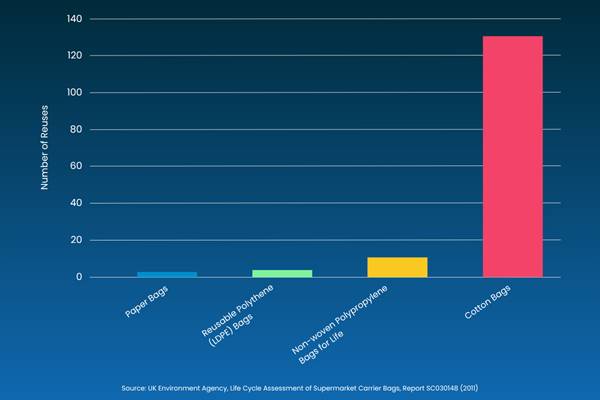
When does your chosen bag "break even"?
The UK Environment Agency's 2011 lifecycle assessment of supermarket carrier bags found that, compared with a conventional single-use HDPE plastic bag, other bag types need to be reused the following number of times before their global warming potential breaks even1
Before selecting a supplier, ask:
A reputable supplier should be able to answer these transparently.
The most effective strategies:
Small changes in bag design create significant environmental savings when multiplied across millions of bags a year.
The bottom line
Sustainability isn't about choosing paper over plastic or automatically replacing every carrier bag with a heavier bag for life, it's about designing smarter. The most sustainable retail bag is usually the one that uses the least material necessary, contains the highest practical level of recycled content, is genuinely reused by customers, and can be easily recycled at the end of its life.
Retailers that base decisions on evidence rather than assumptions are better placed to reduce environmental impact, manage costs, and make meaningful progress toward their sustainability goals.
At Acopia, we work with retailers to develop packaging and retail solutions that balance sustainability, operational performance and customer experience. Rather than promoting one material over another, we help brands evaluate the full lifecycle of their packaging choices to identify the right solution for their business.
Frequently asked questions
What is the most sustainable shopping bag? There isn't a single best option. The most sustainable bag depends on material, weight, recycled content, transport distance, expected reuse and end-of-life recycling.
Are bags for life always environmentally friendly? Not necessarily. They contain substantially more material than lightweight carrier bags and therefore require more energy and resources to produce. Their environmental performance depends on how many times they are genuinely reused.
Is paper always better than plastic? No. Paper is renewable and widely recyclable but heavier, and requires more water and energy to manufacture, creating higher transport emissions. In some applications, a lightweight recycled plastic bag may have a lower overall carbon footprint.
Should retailers choose the strongest bag available? Not always. A bag should be strong enough for its intended use without unnecessary material. Over-engineering increases environmental impact.
What matters most when choosing a sustainable retail bag? The best decisions consider the full lifecycle: raw materials, manufacturing, transport, customer behaviour, reuse, recyclability and end-of-life disposal.
Sources
1 UK Environment Agency, Life Cycle Assessment of Supermarket Carrier Bags: a review of the bags available in 2006, Report SC030148, February 2011: https://assets.publishing.service.gov.uk/media/5a7bff74ed915d01ba1ca7c7/scho0711buan-e-e.pdf