
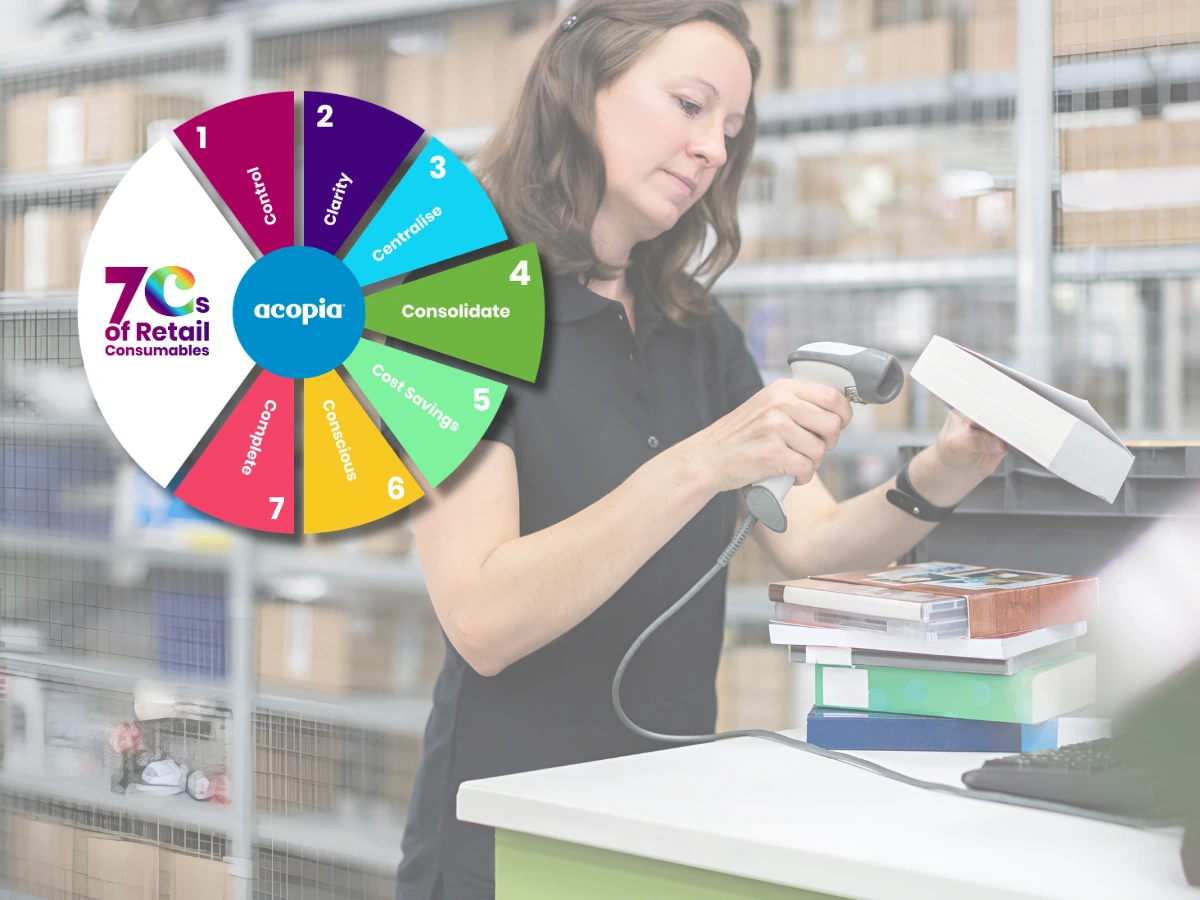
Consolidate is the fourth pillar in the 7 Cs of Retail Consumables. It focuses on simplifying the consumables ecosystem, not by removing choice indiscriminately, but by bringing together suppliers, products and purchasing activity in a more structured, strategic way.
Retail consumables rarely start out complex. Complexity builds gradually as retail estates grow, formats diversify and teams make local decisions to keep operations moving.
Over time, what was once manageable becomes fragmented: multiple suppliers providing similar products, overlapping ranges, inconsistent pricing and limited visibility of total demand. Even retailers with strong control, clarity and centralisation can find themselves managing unnecessary duplication. This is where consolidation becomes critical.
A lack of consolidation often goes unnoticed because its impact is spread across many small decisions.
Common challenges include:
Fragmentation also increases operational risk. When suppliers, products and processes vary by site or region, consistency becomes harder to maintain and disruption more likely.
Research by McKinsey has consistently shown that operational fragmentation increases cost and complexity, while consolidated models improve efficiency and resilience, particularly in indirect and operational spend categories.
Consolidation is often misunderstood as simply cutting suppliers or reducing choice. In reality, effective consolidation is more nuanced.
In a retail consumables context, consolidation means:
What consolidation is not:
Operating without consolidation creates hidden costs that are rarely fully captured.
The UK Government’s Resources and Waste Strategy for England highlights the importance of efficiency, simplification and transparency in reducing waste across supply chains. Fragmented supplier and product landscapes make these goals significantly harder to achieve.

Consolidation often leads retailers to reconsider how consumables are sourced and supplied across their organisation. When purchasing is fragmented across multiple suppliers, systems and processes, it becomes difficult to manage products, pricing and supply relationships in a coordinated way.
A single-source approach offers an alternative. By working with a dedicated consumables partner such as Acopia, retailers can simplify how operational consumables are sourced while maintaining the flexibility required to support diverse store environments.
Rather than managing numerous suppliers independently, a single-source model brings purchasing together through one coordinated supply structure. This makes it easier to standardise products, consolidate demand and ensure greater consistency across the retail estate.
A report by Inverto found that consolidating suppliers can achieve up to 12% cost savings through scale effects alone. In an environment of increasing pressure on margins and resources, savings of this scale can be transformative.
Importantly, a single-source model does not limit choice. Instead, it provides a structured way to curate and manage consumables, ensuring the right products are available while avoiding unnecessary duplication and complexity.
By supporting supplier consolidation and coordinated purchasing, retailers can move away from fragmented supply arrangements towards a more streamlined and resilient consumables strategy.
Done well, consolidation strengthens the supply base, improves consistency and makes consumables easier to manage across complex retail estates.
Consolidation delivers value across the organisation:
Consolidation builds on Control, Clarity and Centralisation. Once retailers understand what is being purchased, have visibility of usage and have brought activity into one place, consolidation becomes achievable at scale.
Without consolidation, it is difficult to:
Without it, complexity inevitably creeps back in, eroding earlier gains.
Consolidation simplifies the consumables landscape, but its impact extends beyond operational efficiency. By reducing supplier fragmentation and aligning purchasing across locations, retailers begin to unlock the commercial advantages of scale.
Working in partnership with a trusted supplier, retailers can consolidate intelligently, ensuring consumables support rather than complicate operations.
This shift creates the foundation for the next stage of the 7 Cs framework: Cost Savings. When demand is consolidated and purchasing is coordinated, retailers are able to reduce waste and protect margins across the retail estate.
Consolidation ensures all teams benefit from a simpler, more structured consumables environment. It reduces complexity, strengthens purchasing power and creates the conditions for long-term efficiency and sustainability.