
Key Insights: 2025 highlighted a retail sector in transition, shaped by shifting consumer expectations, accelerating technology, and continued pressure on costs. Retailers that succeeded were those who adapted quickly, improving customer experience and investing in smarter, more sustainable procurement operations.
As we approach the end of 2025, it’s clear that this year has been one of resilience and adaptation. We have seen the high street hit hard with increasingly cautious shoppers after a year of political and financial change. Retail has had to weather the storm yet again.
The Retail Economic Landscape
With 35 shops on average closing every day on the high street during 2024 according to PWC1 and with 2025 figures expected soon, it is imagined we'll see this number rise again.
Both the 2024 and 2025 budgets have brought little relief to the high street which is still coping with the significant National Insurance bill increase. This was clearly demonstrated in a recent poll by The Charity Retail Association2 where 27% of Charities stated that they are being forced to consider shop closures as a result. And this is sector staffed by over 186,000 volunteers meaning that employers would be avoiding the worst of the NI Increases but still feel cuts are necessary.
With 38% of Charities stating they are also considering scaling back on new shop openings, this has a sharp knock on effect local economy, opportunities and growth.
And it’s not just Charities seeing unprecedented rises in employee costs. Tesco face an extra £1bn increase in their National Insurance bill3. Marks and Spencer’s also commented that they were looking for new cost saving measures as they wrestle with an additional £60m of NI costs. ASDA Chairman Lord Rose said “The industry has been hit hard”
The Retail sector is experiencing prolonged upheaval as it continues to face factors outside of its influence and control such as the cost of living crisis, inflation, EPR and weak consumer confidence resulting in limiting spend to necessary purchasing.
Consumer confidence was rattled again and retail spending fell further as we headed towards the 2025 budget. Time will tell if enough has been done to restore confidence.
Technology’s Transformative Role in Retail
Artificial intelligence and advanced technologies continued to revolutionise retail in 2025 in ways that went far beyond initial expectations. AI became a practical tool rather than a novelty, with retailers implementing it across multiple areas of their business.
AI Applications helping Retail to drive
Retailers are leveraging AI to create personalised customer experiences to help predict shopping behaviour and preferences to create tailor made recommendations.
Those Retailers who successfully balanced technological efficiency with a genuine customer connection saw the most significant gains this year.
AI is also helping retailers transform vast amounts of data into valuable insight – enabling more strategic decision making and successful, targeted marketing.
Sustainability: From Nice to Have to Brand Imperative
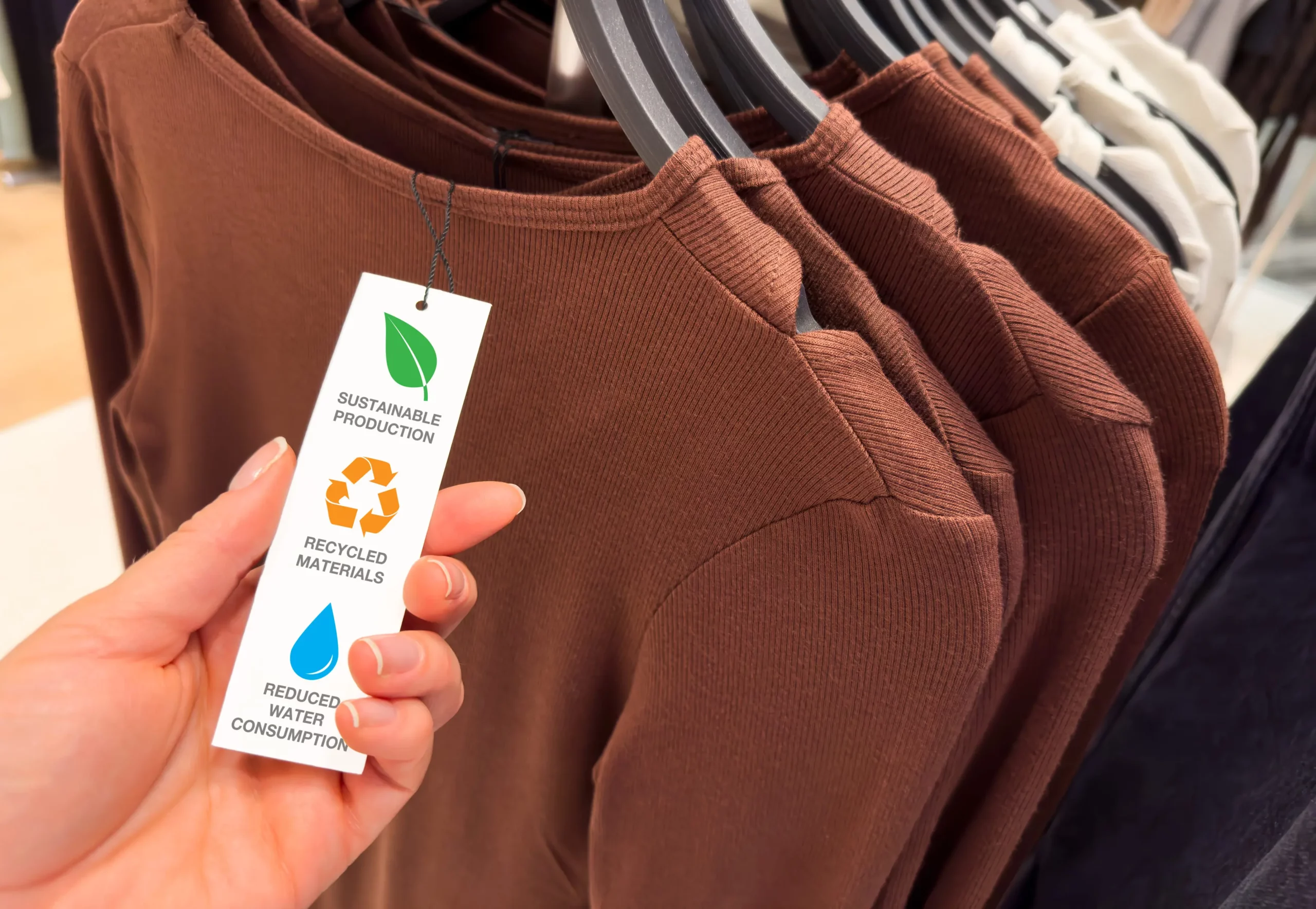
2025 marked a critical turning point for sustainability in retail. Extended Producer Responsibility (EPR) regulations gained momentum, compelling businesses to take genuine, measurable steps towards environmental responsibility.
With the release of the first illustrative fees4, the charges for plastic and paper packaging have become clearer, and brands are no doubt holding their breath to see how these translate into costs for their business.
Additional legislative pressure is also mounting with the introduction of an instore customer waste separation and collection scheme earlier this year which was another step towards eliminating landfill waste and encouraging more of a circular economy approach.
Whilst these initiatives are required and necessary, it could be seen as piling on the misery for the retail industry.
Retail Sustainability Highlights in 2025
Sustainability has also brought many positives too for consumers and brands alike, such as
Retailers are discovering that sustainability is no longer just about competitive advantage but now increasingly satisfying expectations from environmentally conscious consumers.
If your customers, competitors and moral conscience all point toward change, then doing nothing costs more than doing something.
Consumer Behaviour: Shopping with purpose
2025 saw a significant shift in consumer psychology. Shoppers became more deliberate, valuing quality and longevity over pure convenience or impulse buying demonstrated by
This is seeing consumers second think where they purchase, and if their purchase is necessary. Behaviour is changing with 66% of consumers recycling or reusing packaging5 and 39% preferring to repair products rather than replace them as well as buying more second hand items. Platforms such as Vinted are reporting over 60% growth and it is thought will comprise 10% of the worldwide fashion market next year.6
Again all positive for the planet but presenting more challenges for the retail sector.
What’s next for Retail
The most critical activity for 2026 for Retailers will be looking for new ways to remain profitable or to gain profitability. Marks and Spencer’s aren’t the only Retail brand searching for cost saving measures. Strategies such as reviewing GNFR spend is often an untapped resource for many brands.
Perhaps looking at cost consolidation, for example, to optimise and control spend across a brand’s entire retail network can significantly save time, resource and money – all of which is in relatively short supply right now.
Platforms such as MyAcopia help brands with sustainable procurement for Consumables; all those necessary products from toilet rolls to till rolls – everything from Back of House through to Front of House.
MyAcopia brings simplicity, access to a wide range of products, supports curated lists and puts the power of purchasing strictly into the hands of the Brand with the ability to see every penny being spent in one place.
Preparing for the Future
Successful retailers in 2026 will be those who will be able to:
It’s clear that the retail landscape has undergone transformative changes that have reshaped how brands operate, connect with customers and navigate economic challenges.
2025 has been characterised by resilience, technology, and a development of consumer relationships. As we move into 2026, the most successful retailers will be those who view challenges as opportunities for innovation and transformation.
The future of retail isn’t just about selling products—it’s about creating meaningful, sustainable, and personalised experiences that resonate with increasingly discerning and environmentally conscious consumers.