

Rising staff costs and tighter margins have made cost control a key priority for UK retailers. For procurement and finance teams, direct procurement is often under the most scrutiny. However, indirect purchases make up around a quarter of a retailer's operational spend, presenting a considerable cost-saving opportunity.
Controlling indirect retail procurement costs requires a multi-faceted approach including analysing spend by category and store, centralising purchasing and setting tighter controls. Consolidating suppliers can also help drive cost and operational efficiencies.
In this article, we'll share more about these strategies and look at how modern online ordering platforms can save time and money, and support business operations.
If you’d like to talk through your own Goods Not For Resale (GNFR) procurement challenges, the expert team at Acopia is happy to help. Get in touch to find out more.
Here are seven practical ways to manage indirect spend in your retail business.
As the saying goes, 'to measure is to know', so it starts with spend analysis.
Do you know exactly how much your stores are spending on Goods Not For Resale (GNFR) and where? Without that visibility, any savings you negotiate on unit costs can easily be lost to maverick ordering, extra deliveries and invoice admin.
A good place to start is reviewing your purchase ledger, company card statements, and expense claims for the last 12 months of GNFR spend. Are there patterns and/or anomalies, and are they estate-wide or confined to a handful of stores? Your top suppliers may be able to provide some insight to help this process.
Estate-wide patterns may point to pricing or supplier choice, while store-level issues might come down to local purchases and over-ordering. Whatever the reason, it gives you a strong starting point for cost reduction.
Technology plays a huge role in indirect cost savings for retailers. By bringing ordering into one bespoke, central online system, procurement teams can set budgets, approved suppliers and product lists to help eliminate unapproved purchases and overstocking.
Modern purchasing platforms like MyAcopia can create a ripple effect of cost and operational efficiencies throughout your retail business. Along with more control over indirect purchases, they can automate tasks such as invoicing and order approvals to cut down on admin time. They also log purchases by category and store, giving you historical purchasing data to inform forecasting and inventory management.
When essential items like cleaning products run low, retail managers can take matters into their own hands, leading to panic buying and stockpiling. Unapproved purchases like this can take up valuable stockroom space and create extra admin and delivery costs.
Getting stock levels right depends on accurate demand forecasting. Start by examining sales data and historical usage. Review transaction volumes for key items like packaging to work out typical consumption, and consider seasonal peaks. Working with a retail specialist who understands usage patterns and peak trading cycles can help.
Don't forget to track inventory turnover - a low ratio might mean there is excess stock sitting in back rooms. One solution is to find a supplier that can hold stock on your behalf and release it as needed, without stockpiling at the store level.
Admin is often a hidden procurement cost. Every order, every delivery note, every invoice takes time to process. Manual checks also create room for error, including duplicate payments and price discrepancies.
Automating the retail procurement process helps tackle these challenges. Orders can be placed only from an approved list at agreed prices, and invoices can be matched automatically, with exceptions flagged to office teams.
Consolidating suppliers may seem at odds with securing more competitive prices, but it can be a very effective strategy to cut costs. By working with fewer suppliers, you gain more leverage to negotiate better terms and volume discounts. Plus, it means fewer contracts, accounts and invoices to manage.
It also helps build stronger relationships and boost supplier performance. For example, by working with a single supplier, you're more likely to have a dedicated account manager who can fast-track issues. It is also easier to set and track KPIs for things like on-time delivery, order accuracy, product quality and stock availability.
Fewer deliveries can go a long way towards reducing your company's costs, time and carbon footprint. Your suppliers should be working hard to consolidate deliveries and make the most of shared delivery networks.
For storage, look for suppliers that offer low-cost or even free warehouse storage as part of your contract. This frees up valuable space at distribution centres and in-store stockrooms and can help save thousands each year.
This is another example of how closer supplier management, or working with just one supplier, can help reduce costs and meet environmental targets.
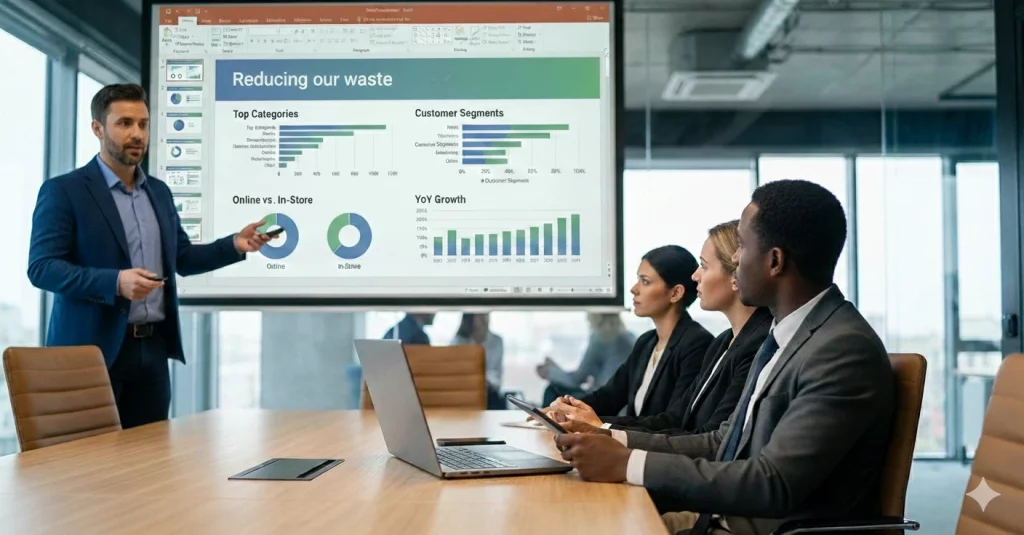
Minimising waste helps meet sustainability targets and also has clear financial benefits. A central ordering system can play a big part by helping control spending and improve demand forecasting.
Packaging EPR fees now charge more for hard-to-recycle household packaging, such as some carrier bags and ecommerce mailers, and that surcharge will rise each year until 2028/29. Your suppliers should help you switch to recyclable alternatives before those costs climb.
Along with cost avoidance, this helps meet growing customer demand, as a third of UK shoppers now report that they prioritise recyclable or biodegradable packaging (source: YouGov).
The strategies discussed here can all help drive up profit margins, boost resilience, and improve risk management. They form part of a multi-faceted approach, the common thread of which is a centralised approach.
To find out how a bespoke online purchasing platform can help reduce costs, find out more about MyAcopia.
Frequently asked questions about indirect procurement best practices
They are the two main types of retail procurement. Direct procurement focuses on the goods sold to consumers. Indirect procurement refers to everything else the business needs to operate, such as office supplies, packaging and cleaning products.
Direct spend usually gets the most attention when it comes to cutting costs because it drives revenue. However, indirect procurement processes can help save thousands by controlling ordering, forecasting demand and managing waste.
Undertaking a full spend analysis once a year, ideally before budgets are set or contracts come up for renewal, is a good benchmark to aim for. Between annual reviews, consider reviewing each store’s spend against budget monthly to catch overspend early. An ordering platform with built-in reporting makes these checks easier and more accurate.
Cost savings reduce what you already spend, such as a lower unit price and reduced waste. Cost avoidance stops a cost from happening at all, for example, stopping off-list orders or avoiding EPR fee increases. It's important to record a baseline for both so you can prove the value of your strategy.